Category: Devotions

  • Not Ready for the Trash

    Displaying IMG_2862.HEIC

    I’ve discovered that my morning coffee isn’t as good when I’m still stuffed from the day before. Thanksgiving is a day when all the cooks break out their best. Never trust a skinny cook or one who says at Thanksgiving, “I think I’m going to try something new this year.”

    In addition to buying enough food to feed a pack of Philistines, pre-Thanksgiving preparation around our house consists of cleaning out the refrigerator and making sure we have enough storage containers to handle the leftovers. Somehow at our house, we end up with extra containers or extra container lids. I’m not sure where they go.  Somewhere, I’m convinced, that there is a misfit Rubbermaid container filled with my missing socks.

    Some foods you don’t have to worry about finding a container for.  When the battlefield that was the Thanksgiving meal is being put away, people will say of the good stuff, “Just leave that out for a little while.”  I’ve never had to worry about putting away deviled eggs. I’ve never worried about what we would do with the brown and serves. Rubbermaid was made for those things we only cook once a year. Rubbermaid is where we put casseroles that we don’t want to throw away…so we refrigerate them for a week or two…and then throw them away.

    The storing of food reminds me of a lady who, when we were growing up, always wanted to get my mother involved in the Tupperware movement. My mother cooked in big pots filled to the rim. In addition to my dad, there were three of us boys. She never needed Tupperware for leftovers. We took care of leftovers for her.

    Today, as you contemplate how much you have eaten and are considering getting a jump start on next year’s diet, think about those leftovers that are relegated to the back of the refrigerator. They may have been good yesterday when they were new. You saw them as useful…yesterday.

    Do we sometimes treat people like Thanksgiving leftovers? They aren’t useful to us, so we move on from them. They are just in the way, so we see if someone else wants to take them so we don’t have to bother with them. We decide that they aren’t any good because they don’t look as good as others.

    After the feeding of the 5,000, Jesus instructed His disciples to “Collect the leftovers so that nothing is wasted” (John 6:12).

    The leftovers mattered to Jesus. Good leftovers and people don’t become less valuable simply because we think they are less useful. Consider the older person who takes a little longer doing things. Think of the person who is no longer a “somebody.” Do you still treat them like a friend? Or the person who has made some mistakes and bad decisions in life and is no longer considered worth the trouble. What about the person who needs more from you than they can ever give back to you?

    Don’t give up on the “leftovers.”

    Excuse me while I go look for the beets.

    I hope you enjoyed reading “Not Ready for the Trash.” Consider subscribing to “The Notebook” to have these stories and devotions delivered directly to your inbox. Thank you for reading!
  • The Blessing of Enough

    Displaying IMG_2861.HEIC

    We have a way of becoming accustomed to blessings.

    There are so many things we take for granted. I’m not going to be as sweet as I am without my morning coffee. My coffee is delivered to my front door. I then turn a knob, and instantly I have safe running water. I put it in a percolator and flip the switch, and electricity helps me be more tolerable to society.

    After making my coffee, I can sit in a home where I can adjust the temperature with the push of a button…or an app on my phone. I can turn on a television and listen to experts so that I know what to think. I do all of this while wearing semi-clean clothes that have been washed and dried by machines that only require listening for a buzzer.

    I can take medicine that most of the world doesn’t have access to so that I can continue to be a blessing to my family. Speaking of family, my wife and I were able to raise our daughters with DISPOSABLE DIAPERS. Tell me we don’t take things for granted.

    Of course, we don’t know where to stop. You can buy a truck with a tailgate that has more functions than a beginner algebra book. Self-closing tailgates with ramps, steps, coolers, and sound systems say more about the driver than the engineer. I used to have a boss that called these “Dude trucks.”  We have heated seats and heated steering wheels. Some cars even have heated cup holders. People, just drink your coffee before it gets cold. One thing that gets me (and my wife has welcomed them into our God-fearing home) is electric salt and pepper grinders. Twisting the wrist and shaking must be beyond our abilities. And I for one don’t need another voice-activated anything in my life. These are all signs of the end times. Look it up in the Book of Hezekiah.

    What I’m trying to say is that, as we approach Thanksgiving, most of us are blessed with more than enough. We may not have as much as others, but we have more than many people around the world.

    We have spent years inventing things to make life easier…and we have all these things…but we are still looking for more. We have made life easier, but we haven’t necessarily made ourselves more content.

    In 1 Timothy 6:6-8, Paul writes, “But godliness with contentment is great gain. For we brought nothing into the world, and we can take nothing out. If we have food and clothing, we will be content with these.” Contentment is learning to want what you already have.

    Thanksgiving is a day that we have set aside to be thankful to God for all of His blessings. Let us not limit this to “a day.”  We must remind ourselves to be thankful every day.

    “Hey Alexa, remind me to be thankful tomorrow.”

    I hope you enjoyed “The Blessing of Enough.” If this encouraged you, share it with someone who might enjoy it. Subscribe to The Notebook (it’s free), and you will receive these stories and devotionals delivered directly to your inbox.

  • Words That Last

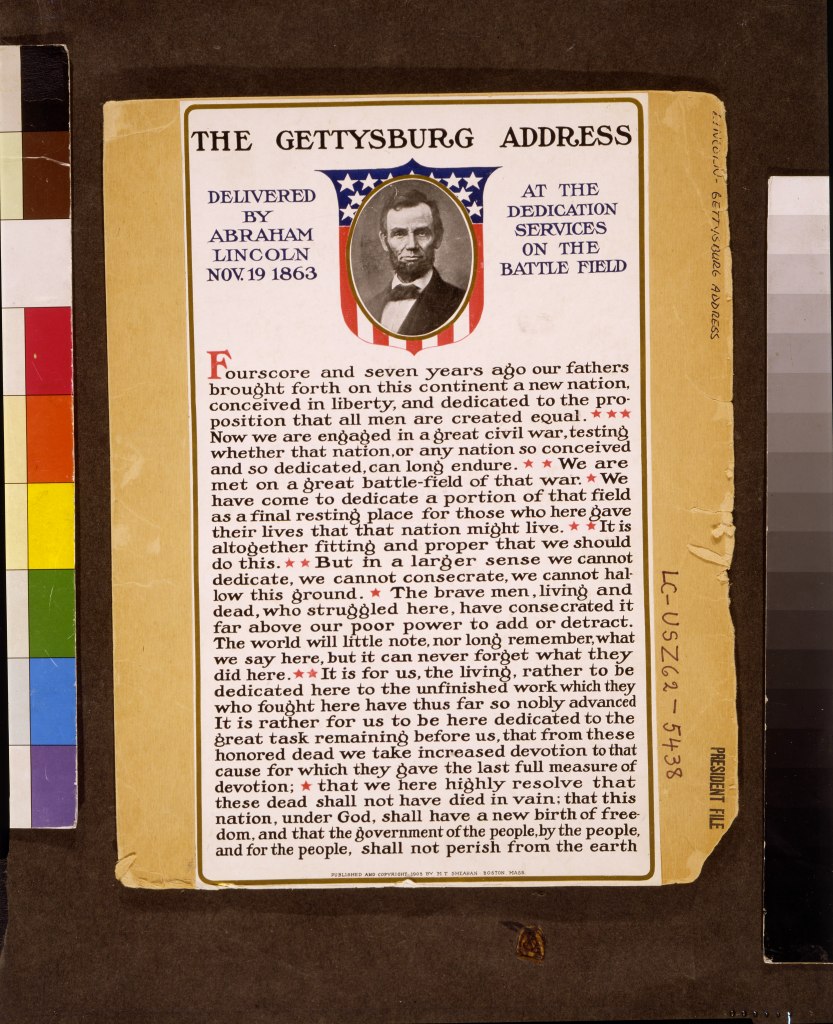
    Today marks the 163rd anniversary of Lincoln’s Gettysburg Address. My girls had to recite it in school. Most people can quote some of it…maybe just the first line or so. Historians say this is one of the greatest speeches in history. It certainly is one of the greatest in the history of the United States.

    The address was 272 words.

    Some 20 years earlier, another president made a speech for which he would become famous. William Henry Harrison delivered an inaugural address of over 8,000 words on a cold, windy, and overcast day in Washington. I’m sure someone in the audience was selling Cliff’s Notes copies. Perhaps wanting to demonstrate his physical toughness, he spoke for an hour and forty-five minutes without a coat. Why is this speech remembered? He got sick soon after making the speech and died 31 days later. Rather than demonstrating his strength, I think he demonstrated that the United States government knows how to put on a good funeral.

    Words have power. Lincoln’s speech, to a grieving nation, explained why their son, brothers, fathers, and uncles were dying. Lincoln understood the lasting power of words. His words were not just informational. They were words of encouragement.

    One of the interesting things about Lincoln’s speech is that he didn’t think that he had delivered a particularly good speech. It is reported that he said to his friend, Ward Hill Lamon, after the speech, “That speech won’t scour. It is a flat failure, and the people are disappointed.” Lincoln was not even the featured speaker at the event. He would never know the power of these few words and how they have impacted generation after generation.

    Our words matter and will be carried in the hearts of others long after we forget what we said.

    When I felt called to ministry late in life, I felt woefully unprepared. I had always wanted to attend seminary but felt that it wasn’t realistic due to my stage of life and the financial burden. However, a local minister who had previously taught at the seminary started teaching extension courses for people who were in the same boat I was in. I could take these classes…but I was afraid. It had been a lot of years since I had sat in a class of any kind. Many of the people taking these classes had been pastors for years. I wasn’t sure I was up to it. However, after much prayer, I decided to give it a try. There wasn’t a great deal of financial risk, and I figured when I got into the classes and couldn’t pull it off, I would just drop it. I figured I could just not show up and no one would notice. No harm, no foul.

    In one of my classes, I had an instructor named Dr. Argile Smith. He returned a paper that I had written and, in addition to the grade, wrote three little words: “You write well.”  He was probably just being nice, but that short sentence convinced me I could do it. I finished the courses in the extension setting and went on to receive a Masters Degree from the Seminary. I’ve been pastoring a local church for over 15 years and have written a couple of books.  It all started with, “You write well.”

    Your words matter. Most of us will never stand before a crowd like Lincoln. But that doesn’t mean that our words aren’t important. Telling a child that you are proud of them…telling your spouse how much they mean to you…encouraging someone who is going through a hard season. Sometimes you don’t realize how much a person needs to hear an encouraging word from you.

    Proverbs 25:11 says, “A word spoken at the right time is like gold apples in silver settings.”  In other words, a good word is of great value. You may never know what words you say that people will carry with them.  Therefore, choose your words wisely. (That last line was meant for me!)

    I hope you enjoyed this piece. Subscribe to receive new stories and devotions delivered straight to your inbox. It’s free!

  • If You Can’t Be Handsome, Be Handy

    In 1927, Charles Lindbergh completed the first solo nonstop transatlantic flight. Almost a quarter century later, Edmund Hillary and Tenzing Norgay reached the summit of Mount Everest. Then, in 1969, Neil Armstrong became the first person to walk on the moon. Great achievements in history.

    I’m good at opening jars.

    We all have gifts. My wife is not only an artist, but she also has a way with children. She has a way of comforting and encouraging a child. I love to sit back and watch her use her gifts. My daughters have gifts, too, and yet they are different.

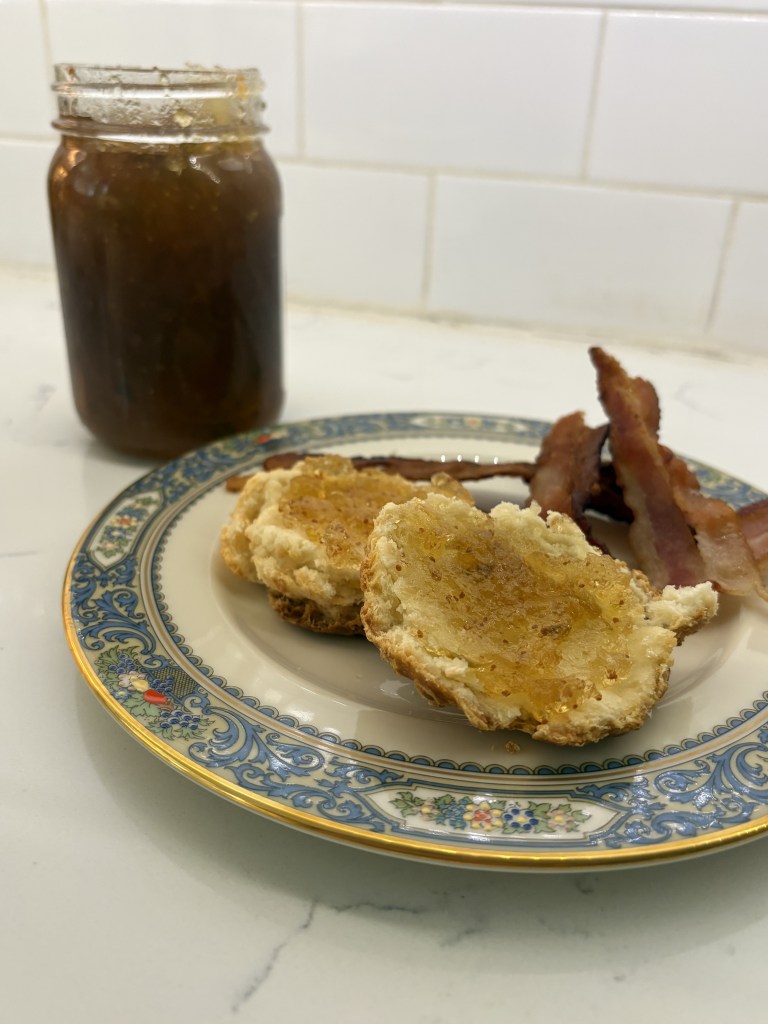
    Recently, my wife and daughter couldn’t get a jar of fig preserves open. So the offending jar was brought by my office, and I conquered it in the parking lot. It’s just a gift. God and grip strength. If you’re like me, you have to celebrate every small victory.

    Different people. Different gifts. And that’s okay. Don’t confuse having different gifts with having different levels of importance.

    Some people are teachers and have the ability to stand out front and speak. Others prefer to work behind the scenes. Some people are handy. The rest of us are not. Some people are cooks. Some of us are eaters.

    The church, operating properly, is made up of many different parts. In 1 Corinthians 12:14-18, Paul tells us that the body has many parts, and every part has a purpose. In verses 21-22, he reminds us that one part shouldn’t tell another part it isn’t needed. In verses 25-26, we see that the parts should have the same care for one another.

    We are different. That’s good. Your gift and my gift aren’t the same. That’s good, too. I need you to help me in those areas where I’m lacking. I need you to exercise the gift God has given you.

    And maybe, just maybe, you’ll need me to help with that jar that won’t open.

    Enjoyed this devotion? Subscribe to receive new posts in your inbox, and please share with someone who you think might enjoy a story or some encouragement. Thanks for reading!

  • Who Needs a Recipe?

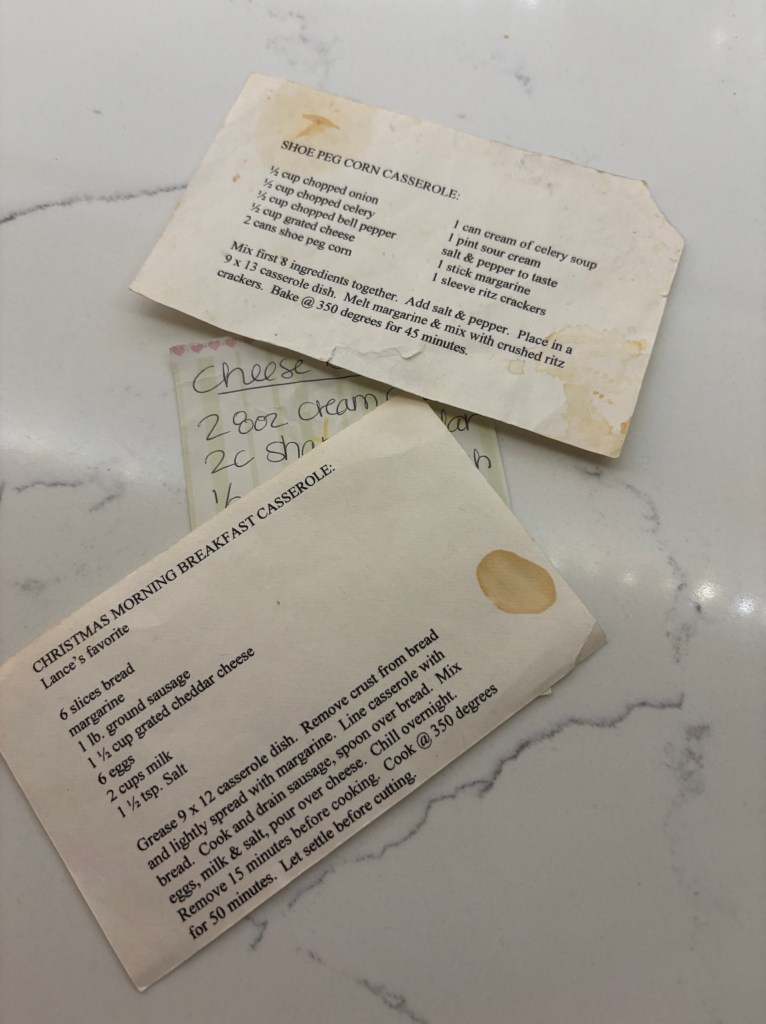
    With Thanksgiving approaching, it’s time to dust off the “must-have” dishes that are so good you only cook them once a year. Yes, that was meant to be a little sarcastic. As my girls (who are both very good cooks) have gotten older, we have all settled into what we are supposed to cook. I do the turkey. Nothing else. The other 75 dishes are prepared by my girls, my wife, in-laws, and outlaws. It seems reasonable that I would do the turkey. I’m starting to resemble one. Round, messy after sitting around for an hour or two, and always a little greasy.

    I could say that I take part in making the dressing by providing the drippings from the turkey. But that’s a stretch. That’s as close as anyone gets to the dressing. It is a passed-down concoction. Instead of just saying it’s good, the best compliment someone can come up with is, “Why, that tastes just like Mamaw’s.” I didn’t know the Mamaw in question, so I eat in silence.

    Watching all these dishes come together, it’s amazing that there are no recipe cards lying around the kitchen. Almost everything, other than the turkey, is cooked at the same 350 degrees. Some of the cooks measure…some just pour and add pinches. If you are ignorant enough to ask how much milk goes into something, the standard answer will probably be, “Till it looks right.” Or if, out of curiosity, you ask, “How long do you need to cook the corn casserole?” “Till it’s done” seems to be the common answer.

    I love the outcome, but this system bothers me. I measure. I follow directions. I figure the good folks at Butterball have probably perfected the process. Nobody at Thanksgiving wants to hear, “I’m trying something new.” In my mind, all things should be measured. The rice-to-water ratio has to be 2 to 1. Grits are easier if measured. My wife “eyeballs” butter and sugar. I prefer to leave that process to the experts.

    I’m starting to realize that you can’t learn everything by simply going off a recipe card. You learn how to cook…really cook…by watching.

    You don’t learn how to live life…just by looking at the cards either. You learn by observing.

    I’ve learned about generosity by watching my family members give and help others. Even though I’m fixing to kick down the door and move into my sixties, my brother will still, at some point, whisper, “Do you have any money in your pocket?”

    I’ve learned about faithfulness by watching church members show up Sunday after Sunday, even when it was a challenge just to get out of bed. I’ve seen kindness displayed in the strangest of places. I’ll never forget hearing about one of our local widows going to the grocery store and having the owner walk alongside her as she shopped because that’s what her husband used to do, and she hadn’t gotten used to shopping alone.

    I’ve seen up close and personal what patience looks like. Angela agreed to better or worse…but I think she was assuming there would be more better than worse.

    Paul, writing to his “son in the faith,” Timothy, reminds him of the lessons he has learned from those who came before him. In 2 Timothy 1:5, Paul writes:

    “I recall your sincere faith that first lived in your grandmother Lois and in your mother Eunice and now, I am convinced, is in you also.”

    Oh, I’m sure Lois and Eunice taught young Timothy the Scriptures, but I’m just as sure he learned by watching them.

    Guess what…people are watching you.

    What will the next generation learn from observing you? Some folks will never darken the door of a church, but they will observe how you live. Some people may never remember a single word you have said to them, but they will remember how you treated them.

    Don’t let the good things you have learned by watching others die with you. Leave some recipe cards on how to live life behind, if you must. But more importantly, leave an example.

    “How generous should I be? How faithful should I be? How kind should I be?”

    Just a pinch more.

    Enjoyed the devotion? Subscribe to receive more stories, devotions, and quotes delivered right to your inbox.

  • Luke the Drifter

    I’ve found that one of the most difficult tasks of writing a book is deciding what to put on the cover. My mind isn’t particularly artsy. I want to put a title in black letters on a white background and call it a day. My wife reminds me that my ideas for book covers always look like textbooks. Nobody likes or wants to buy textbooks.

    In a flash of brilliance, I realized that my wife is an artist and, for me, she works for free. But even with her help, it’s hard to capture the essence of a book in a single picture. Indeed, you cannot judge a book by its cover.

    You can’t judge people by simply looking at the outside either.

    Many people we meet aren’t always what they appear to be. The guy you pass in Walmart wearing camo sweatpants and Crocs may (emphasis on may) be a genius. The loud, laughing guy in the crowd may be carrying a world of hurt. Mr. Calm may be on the verge of becoming Mr. Snap. The young girl everyone thinks is beautiful may hate herself because she doesn’t feel pretty.

    Sometimes people take on another identity, an alter ego, that reveals a different side of who they are. Samuel Langhorne Clemens did that when he became Mark Twain. As for me, if I ever decide to create an alter ego, I might go by the name “Pastor Portly” or “The Sweaty Theologian.”

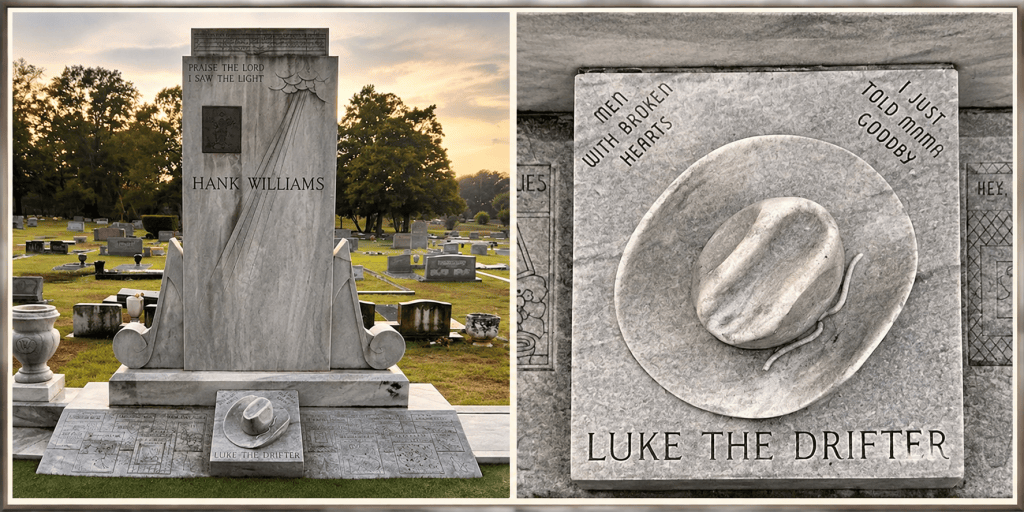
    One of the most fascinating examples of an alter ego was that of Hank Williams Sr. Williams’ career was like a huge, bright, exploding sky on the Fourth of July. His first commercial record was released in January 1947, when he was just 23 years old. His short career ended when he died at the age of 29 on New Year’s Day 1953. During that brief period, around 30 of his songs appeared on the country charts, and 11 reached number one, including records that became hits after his death. He sold millions of records during his lifetime. Since his death, thousands of recordings of his compositions have been made by other artists.

    He lived life at full speed. He struggled with alcohol, personal troubles, and physical pain. He was the poster boy for “live hard, live fast, and make a beautiful corpse.” He burned out way too young.

    But behind the public honky-tonk hero lived Luke the Drifter.

    Hank took on the alter ego of Luke the Drifter for several reasons. Part of it was a business decision. On a Saturday night in a loud honky-tonk, a lot of people want to feed the jukebox and hear Hank Williams songs. A recitation of “The Funeral” might dampen the mood. Hank’s producer felt it might be better to release the gospel songs under another name.

    But there may have been something more personal to it. The Luke the Drifter persona seems to have taken Hank back to a time when he wasn’t fighting so many demons. He was back at church as a child, surrounded by the old hymns of the faith.

    One of the most interesting things about these two sides of Hank was that they seemed to talk to one another. Hank would sing about the wild life and broken hearts. Luke would sing about mercy, compassion, and forgiveness. Luke seemed to understand Hank’s struggles.

    Luke was a different side of Hank. While people were feeding jukeboxes coins to hear “Your Cheatin’ Heart,” Luke was delivering stories and reflections about faith, human suffering, and the consequences of life’s choices. There was darkness and hope in the words of Luke the Drifter.

    In the recording “Men with Broken Hearts,” you get a glimpse of the hurt Hank himself may have understood all too well. The last verse reads:

    “Life sometimes can be so cruel that a heart will pray for death. God, why must these living dead know pain with every breath?”

    I’m no poet, nor the son of a poet, but that’s good stuff. Dark stuff.

    But alongside the darkness, there was hope. The story goes that while returning home from a trip with his mother, Hank was riding in the car when she noticed the lights of the airport. She told him they were getting close to home because she could see the lights. Those words reportedly stayed with Hank, and he turned that simple observation into one of his greatest songs, “I Saw the Light.”

    The song speaks of wandering through life, chasing the things of the world, and finally recognizing the need for something greater. It is a song about coming home, not just to a place, but to God.

    In one of Hank’s great Luke the Drifter recordings, “Help Me Understand,” he closes with a short prayer:

    “Take me and lead me, and hold to my hand. Oh, Heavenly Father, help me understand.”

    We’ve been there. Life comes at us. Hurt becomes a constant companion. Worry lies down with you every night and wakes up with you in the morning. Tomorrow is filled with anxiety because of some unexpected event. We don’t understand. We want answers. Somehow, we think if we had answers, things would be better.

    Knowing doesn’t always make things better.

    Christian faith isn’t believing only when we have all the answers. Faith doesn’t require all the details. Faith is trusting that God has all the answers, knows all the details, and is good. God is not surprised by the things that come our way. My friend and hero, an evangelist, used to say, “Did it ever occur to you that nothing ever occurred to God?” He knows your hurts and worries.

    Pray, as Luke the Drifter sang, “Heavenly Father, help me understand.” But trust Him even when you don’t.

    Signed,

    Reverend Goodenough

    Enjoyed the story? Subscribe to The Notebook and have new stories and devotions delivered straight to your inbox. I’d be glad to have you along.

  • The Crooked Post

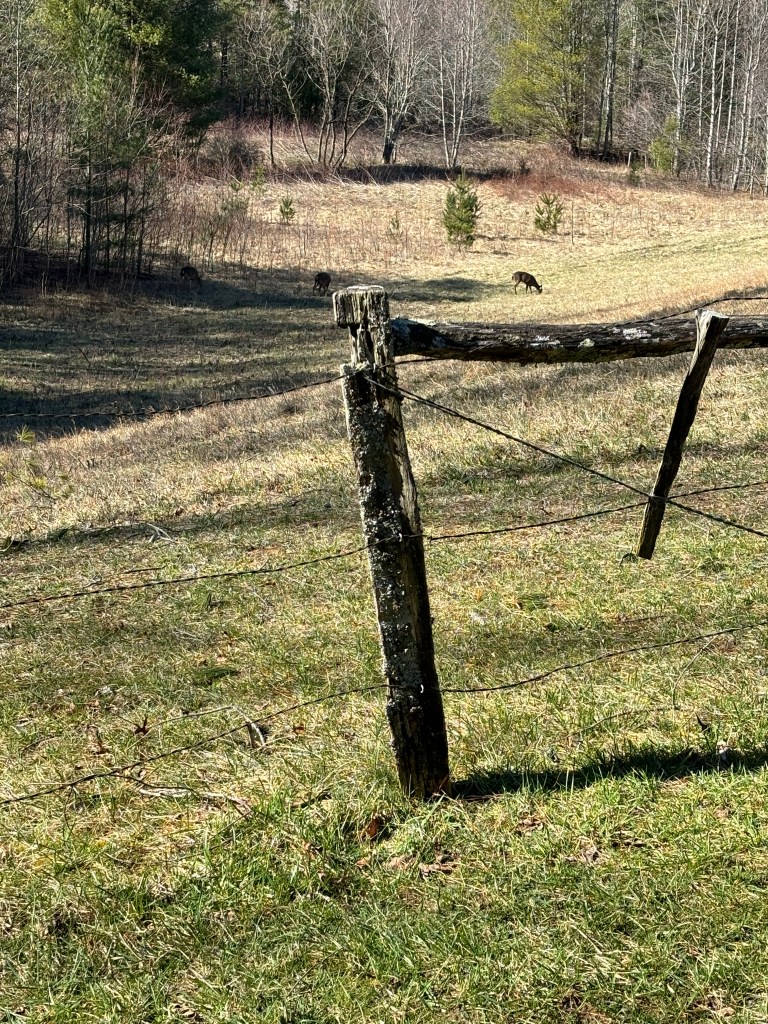
    One of the things that will stop traffic in Cades Cove quicker than a funeral procession in Alabama is when someone spots some wildlife. As you stop and look at bears, deer, or whatever else may wander up, it’s hard to take it all in. You have a beautiful creation in one of the most beautiful places on earth. But some folks…only notice that the fence is a little crooked.

    One thing I’ve learned in the banking business is that there are certain things…that just have to be absolutely correct. Title work and deeds really don’t function under the “that’s close enough” principle. Tattoo artists need to spell better than I do. Pregnancy test manufacturers need to be precise. The accuracy of a pregnancy test matters…don’t look for the ones on sale.

    As a kid, I was fascinated by a thing I saw at our local police department. It was a trailer that had what looked like a concrete barrel on it. I had to find out what it was. Someone told me it was used by the bomb squad to blow up bombs. Shock and awe are overused, but that sums up my feelings at the time. Someone got paid to blow up bombs…and I was a little excited that there was the possibility of bombs in my quiet little town. BTW, the official term for this device is an EOD…explosive ordnance disposal trailer. Sounds better than a bomb blower upper.

    Bomb squads, tattoo artists, and some bankers need to be precise. But you could also lump into that crew barbers and brake mechanics. A barber doesn’t get much room for error. Lop off half an eyebrow, and people will think you’re surprised for the next six weeks. A brake mechanic doesn’t get much room for creative interpretation. Your family, not to mention your life insurance agent, would prefer he get it right the first time.

    Some things just have to be right.

    But think with me a moment about some other things that don’t have to be perfect. For instance, the guy who sings the national anthem at the local dirt track can be given some grace for missing a note or twelve. The assistant principal at a local graduation who struggles with pronouncing the names of kids whose parents mispronounce their names. The lady at the local grocery store deli will still be appreciated if every biscuit doesn’t look the same. They still taste good with enough gravy.

    Sadly though, we tend to spot faults quicker than we do perfection in things that are well done. Take, for instance, an old wire fence. Someone dug and fussed and sweated and set hundreds of posts that will be in place until the rapture…but the one that is noticed is the one that is just a little bit crooked. We can ride for miles and not really even notice the fence until we see a flaw.

    We can do this with people as well. We are quick to pick up on some flaw or failure and ignore years of faithful living. Sometimes that one little flaw makes us look at them differently.

    We don’t just focus on the flaws in others; we can do the same thing when we look at ourselves. We see all the things that are broken, flawed, and lacking. We aren’t handsome enough, young enough, smart enough, or rich enough.

    One flaw causes us to overlook a lifetime of good.

    Don’t get me wrong, I’m not saying that we pretend that the things that are wrong are right. But we also need to look at the flaws in others, and in ourselves, with mercy, grace, and humility.

    In the Sermon on the Mount, Jesus spoke about looking at a brother who had a tiny splinter in his eye and telling him he should do something about it…while we have a huge beam of wood in our eye but don’t see a problem with it.

    The next time you’re out riding, look at those old fences. Some of the posts are crooked and bent, but they’re still doing what they were put there to do.

    God has been merciful to you. Extend mercy. God has shown you undeserved grace. Extend grace to others.

    Look beyond the crooked fence post.

  • It’s Not Just About the Destination

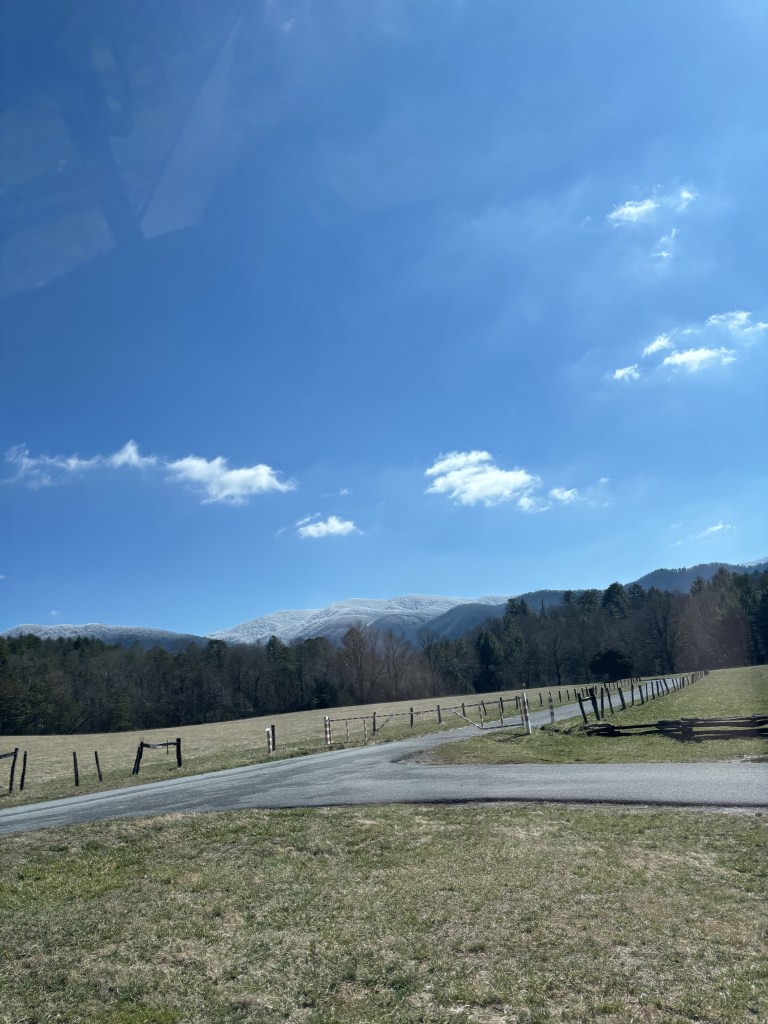
    One of my favorite places in the world is Cades Cove in the Smoky Mountains. It is a beautiful place that takes you back in time. There are no tall buildings, traffic lights, or interstates. Shoot, there isn’t even a Dollar General in the Cove.

    One thing you can’t leave behind, even when visiting someplace as peaceful as the mountains, is the need to make decisions. You have to decide what you want to do when you get there. Will your trip consist of sightseeing, hiking, or hanging out with the fudge-and-knife crowd in town?

    If you’re going to the Cove, you need to decide what time to go. It may be tempting to have one more stack of pancakes, but if you get there early enough to watch the place come alive, you won’t soon forget it.

    You also have to decide how you’re going to make your way around the loop. I’ve seen people walking it. That might be enjoyable if it weren’t for the kids hanging out of passing car windows, taking pictures of you. I even rode a bike around the loop once. Personally, it was hard to enjoy the scenery while listening to my heartbeat in my ears and hoping the numbness from my waist down would eventually go away.

    For those of you who have never been, the loop is the road that meanders through the Cove. It’s eleven miles long, but it can take about as long to get around as it takes to get around Atlanta on I-285. Once you pull onto that road, just get in line behind the car ahead of you and start humming, “Wherever He Leads, I’ll Go.”

    In January 1936, hymn writer B. B. McKinney sat with missionary R. S. Jones, who had learned that failing health would prevent his return to Brazil. When McKinney asked what he planned to do next, Jones replied, “Wherever He leads, I’ll go.” Moved by those words, McKinney wrote the hymn that afternoon.

    We all have decisions to make. Some aren’t all that important. What time will I drive through Cades Cove? Others are much more important. What will I do with Jesus Christ? Will I follow Him even when I don’t know where the road will lead?

    In life, and in our walk with Christ, we often focus on the final destination. What will the end of the journey look like? Where will this road take me? We are more willing to travel a strange road if we know what awaits us.

    Faith doesn’t always work that way. Sometimes God shows us the next step without showing us the whole road. We want to know what’s around the bend, but He asks us to trust Him one step at a time.

    Today, I want you to stop and think about the journey. When you belong to Christ, you can trust Him with the destination. But don’t become so focused on where you’re going that you miss what God is doing along the way. Enjoy the journey. Notice His goodness in the ordinary moments. Learn to recognize His presence in the quiet places. Remember that Jesus Christ is with you, even when you cannot see what lies ahead.

    Again, I love the mountains. I love seeing their beauty, but I especially love going there with my wife and girls. The time we spend together is part of what makes those trips special. It’s not just about getting to Cades Cove or seeing another beautiful view or a bear holding up traffic. It’s about the people beside me and the memories we make along the way.

    The same is true when we follow Christ. We may not know where He will lead us, but we can know who walks beside us. And sometimes, the greatest blessing isn’t just reaching the destination. It’s learning to enjoy the journey with Him.

    If you enjoyed this story, find others at http://www.ScottSullivanWrites.com.

  • It’s Time to Buy Bread

    Living on the Gulf Coast, we know the routine when a hurricane (or, as some people say, harricane) heads our way. We’ve been down this road before. It’s funny, but Coast folks date things by hurricanes. “We got the Chevy right after Katrina.” Unfortunately, we got a lot of things after Katrina. Or, “We moved into our house around Elena.” It’s just a Coast thing.

    I’m sure this takes place in other parts of the country as well. There is some old guy (he would have to be old) in Atlanta who has said, “Yeah, we got married just before they started working on the Interstate.” Someone, somewhere, is going on about how they met their wife in the Shoney’s, before it became a Chinese restaurant.

    One of the first things you learn about hurricanes is that you can’t control them. (Conspiracy theorists, move on.) Experts, and now AI, have gotten real good at figuring out where they are going and how strong they might be. We know that dust coming up from the desert in Africa is our friend. We pray for dry air. We check temperatures in the Gulf. We think we understand wind shear. But with all that knowledge, we still can’t change them.

    Coasties know the routine. Secure things in the yard. I think this might have been the first time I took down a Fall flag. Get gas. Check your hurricane box. I keep one with flashlights, chargers, extension cords, and a roll of duct tape. Cause you never know when you will need to tape something.

    We hit the grocery store, too. I get a little out of control. There is something about hurricanes that makes me want to get way too many cans of things we can warm up on the gas stove. He may not have ever received a James Beard Award, but Chef Boyardee was no slouch.

    We empty the water, bread, and milk sections of the grocery store. And then we wait…eat…wait…and eat.

    The funny thing is, after all the preparation, there comes a point when there is nothing left to do. The yard is picked up. The gas cans are full. The phones are charged. The hurricane box is sitting where you can find it. You have enough canned food to feed your family for three weeks, even though you know good and well you are going to eat it all before Tuesday.

    Then you sit and watch the weather.

    You watch the little line on the map. Did it shift??!!! You watch the spaghetti models. You watch the wind speed. You watch the cone. You watch the storm wobble a little to the east and feel a little better. Then it wobbles back west and you start watching again.

    Eventually, though, you realize there is nothing else you can do.

    After you have done all that you can do…you trust.

    Psalm 46:1 says, “God is our refuge and strength, a helper who is always found in times of trouble.”

    I like that. It doesn’t say God will keep trouble from coming. It says He will be our refuge when it does.

    If you think about it, life and hurricanes are a lot alike. There are things that will come your way that you have no control over. You couldn’t stop them if you tried. Life happens. Storms happen. Bad news comes. Plans change. People disappoint us. Doors close. Sometimes the forecast changes overnight.

    We spend a lot of time trying to control things that were never ours to control in the first place.

    That doesn’t mean we sit around and do nothing. We prepare. We make wise decisions. We do what we can. We help our neighbors. We take care of what God has placed in our hands.

    But eventually, we have to leave the rest with Him.

    The hurricane may pass east of us. It may turn. It may weaken. It may strengthen. We can watch the forecast, but we cannot steer the storm.

    And life is the same way.

    We prepare the best we can and then we trust the One who knows the whole forecast.

    God was with us before the storm. He is with us in the storm. And He will be with us after the storm.

    So buy your bread. Fill up the gas cans. Bring in the chairs. Charge your phone.

    And when you’ve done all you can do, trust God.

    He’s still in control.

  • The Way I Am

    If you know me, you know that I’m obviously cultured. Take, for instance, my appreciation for Merle Haggard. Haggard was the poet of the working man. You don’t just listen to his songs; you are dragged into them. For some, Merle is an acquired taste. If you don’t like him, I suggest you get some taste. I saw him in concert several times while I was in high school. While everyone else was excited about the latest ear-splitting leather-clad screamer…I saved up my money to go see Merle and possibly the most talented group of musicians in country music history, The Strangers, play in person. One night I remember sneaking back behind the stage and talking to Haggard’s horn player. I was in high cotton.

    One of his many hits was the song “The Way I Am.” In it, he sings, “Wish I enjoyed what makes my living, Did what I do with a willin’ hand, Some would run, but that ain’t like me, So I just dream and keep on bein’ the way I am.” That’s strong. Songwriter Townes Van Zandt said there were two types of songs: zippity do dah songs and the blues. Haggard didn’t sing too many zippity do dah songs.

    That notion of “that’s just the way I am” carries over to many aspects of our lives.

    Have you ever heard these (or said these)?

    “I have a temper…that’s just the way I am.”

    “I speak my mind…that’s just the way I am.” (Remember, an empty wagon makes the most noise.)

    “I don’t forgive easily…that’s just the way I am.”

    “My dad was like this…that’s just the way I am.”

    “I grew up thinking that about “those” people…that’s just the way I am.”

    “I’m not going to change at my age…that’s just the way I am.”

    We don’t have to become someone we are not. But many times these “that’s just the way I am” statements are just excuses. We are the way we are…because we want to be that way. We get angry because we like it. We say things that are hurtful because we like it. We don’t like forgiving people. We act like Dad because it’s easier than changing. We treat people differently because we choose to and like to feel superior.

    Not everything handed down to us from the previous generation is right. Pharmacies used to sell cigarettes that were advertised to help with asthma…doctors used to use leeches…and babies were given opium to help them sleep. Just because something is the way it’s always been doesn’t mean it doesn’t need to change.

    Think about those “That’s just the way I am” statements in your life. If you are honest, some come from hearts that need to repent. James 1:14 reads, “But each person is tempted when he is drawn away and enticed by his own evil desires.”

    Why do we do the things we do? Because we choose to.

    Yes, your dad may have had a temper. Your family may have a history of alcohol abuse. You may come from a family where speaking your mind (when silence might be the better option) is promoted.

    Don’t do things that will hurt your testimony…because “That’s just the way I am.”

    Change.

    God indeed accepts us as we are…but He loves us too much to leave us there. There are things in our past that we have no control over. We all have things in life we didn’t choose. But we can choose who we will become and how we will behave.

    Break the cycle in your family. Become a positive example for those who follow you.

    Sing it, Merle…