Author: Scott Sullivan

  • Count Chocula and Mama

    I know everyone says it, but my mother is special. She is funny and every bit a lady, but she is also as tough as anyone I know. She is small, but you don’t want to cross her. She has been widowed twice and seen things that might break weaker women. Life has swung at her hard more than once, and she just keeps swinging back. I think all that she has been through has just made her determined not to let life beat her.

    Oddly enough, one of my first memories of my mother has to do with Count Chocula cereal. Count Chocula is a General Mills product that is made of cereal, marshmallows, and imitation chocolate. When it is mixed with milk, you basically start the day with cereal, chocolate milk, and lots of sugar. It had the same effect on kids as energy drinks have today. Get the kids wired, then send them off to some teacher who isn’t making nearly enough to put up with them. Now I understand why there was so much cigarette smoke in the teachers’ lounge.

    I was introduced to Count Chocula at a preschool/daycare called The Honey Pot. I’ve always thought that was an odd name for a childcare facility. Sounds more like something you’d find on Bourbon Street. My mother worked at The Honey Pot for several years when I was young. She was also a teacher’s aide in the public school system. Neither of these jobs would be considered places where you worked to get rich. She would get up before the sun came up, get dressed, get me dressed, and we would head out. Mama probably saw more sunrises than most fishermen. One of my earliest memories in life is sitting at short tables in small chairs while it was still dark outside, eating Count Chocula. In my little kid’s mind, I thought it was awesome. We didn’t eat Count Chocula at home. We stuck with the basic lower-cost Cornflakes, and occasionally Snap, Crackle, and Pop would join us at the table. Breakfast at home typically consisted of stuff that could be prepared in mass quantities to feed three boys. Pots of grits, scrambled eggs, and whop biscuits (the canned biscuits you would hit on the edge of the counter to open and make everyone in the kitchen jump) were staples. On cold mornings, I remember my dad making cinnamon sugar toast. It was white bread with pats of butter, and on top of this, there was a generous sprinkling of cinnamon and sugar. Then he’d put them in a gas broiler on the bottom of the stove. The broiler was nice because not only did it make the best toast ever, but it took the chill out of the air in the kitchen. I still make this sometimes for my girls; we call it “Pop toast” after my dad. So Count Chocula was a treat. It cost more than the grits and eggs and wouldn’t last as long. I felt special because I got to go eat Count Chocula before any of the other kids arrived at daycare. I was too young to understand ideas like sacrifice and hard work. I just knew my mama made me feel special.

    Now, as an adult, I realize that those Count Chocula mornings were never really about cereal. They were about love and sacrifice. My mother wasn’t there before everyone else because she was a morning person, or even because she knew I liked the cereal. She was there working at an underappreciated job, potty training kids, and wiping runny noses because our family needed it to make ends meet. My mother worked as an assistant teacher and at the daycare. My dad was a history teacher. Even today, schoolteachers in Mississippi rank at the bottom or near the bottom in pay. Apparently, the high-paying jobs go to essential people like insurance claim denial specialists. To put it mildly, our home was not flush with cash. Most months, the money ran out before the month did. Back then, you learned real quick the difference between wanting something and needing it. Three boys go through not only a lot of food but also have a lot of other expenses. We played almost every sport (except the communist ones like soccer). That was a time when parents still believed fresh air and dirt could cure most childhood problems. We were given piano and art lessons. We went on every church trip. In the summer, I remember driving down to Pensacola for the day and getting water blistered and driving home that afternoon. Some of my favorite memories were summer trips to Atlanta to see the Braves play. My dad usually tried to work it so that our trip would allow us to see the Cincinnati Reds play.  Johnny Bench was my guy.  We would go and watch not only the game but also get there early enough to watch the teams take batting practice and warm up. I loved it. My oldest brother, I think, liked it as well. My middle brother, who now lives in Atlanta, hated it. He wasn’t a baseball fan. It was torture for him.

    All these things I mentioned cost money. Money that we didn’t have for all these extras. So this takes us back to The Honey Pot. It’s still dark outside, and a chunky blonde-haired kid is filling himself with Count Chocula because there is a mother there who was willing to do whatever it took to see that her boys had all they needed and most of what they wanted. Nobody called it sacrifice then. It was just what mothers did.

    Yes, I think my mama is special.

    Enjoyed this story? Subscribe to The Notebook and receive new stories and reflections delivered right to your inbox.
  • The Crooked Post

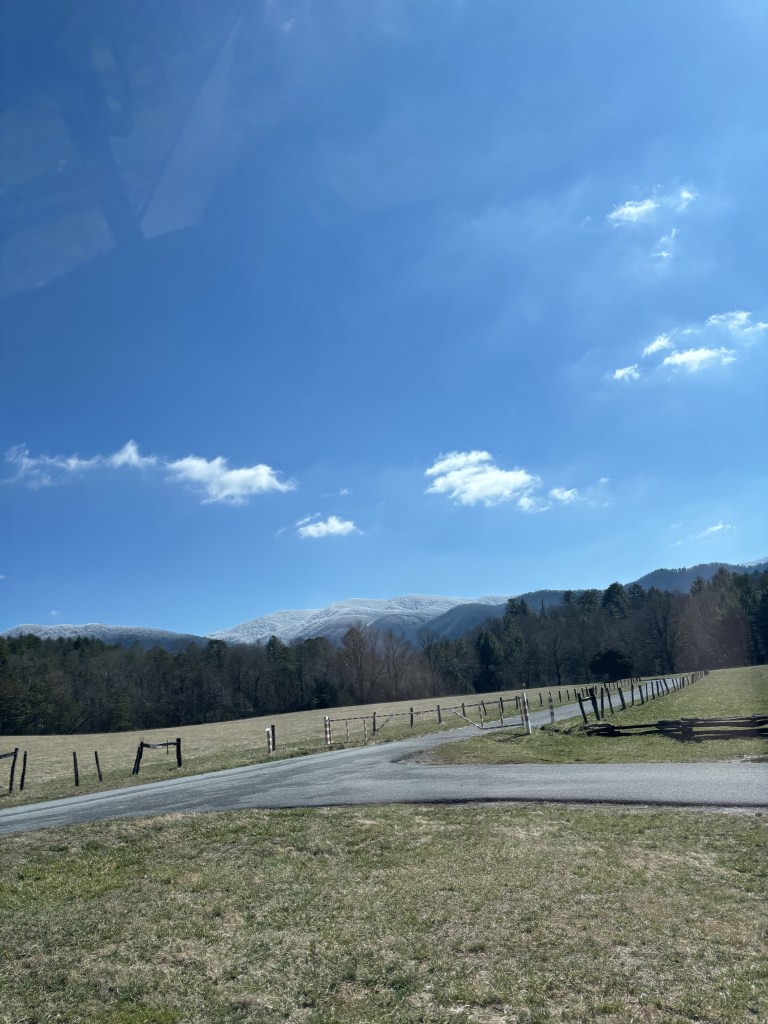
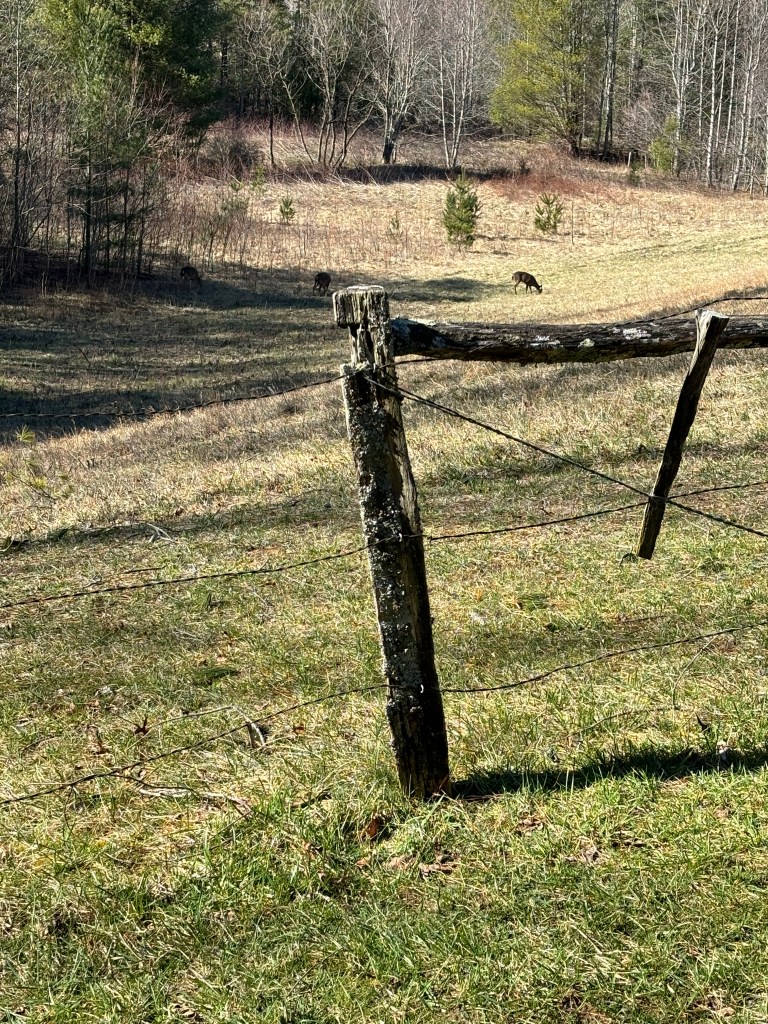
    One of the things that will stop traffic in Cades Cove quicker than a funeral procession in Alabama is when someone spots some wildlife. As you stop and look at bears, deer, or whatever else may wander up, it’s hard to take it all in. You have a beautiful creation in one of the most beautiful places on earth. But some folks…only notice that the fence is a little crooked.

    One thing I’ve learned in the banking business is that there are certain things…that just have to be absolutely correct. Title work and deeds really don’t function under the “that’s close enough” principle. Tattoo artists need to spell better than I do. Pregnancy test manufacturers need to be precise. The accuracy of a pregnancy test matters…don’t look for the ones on sale.

    As a kid, I was fascinated by a thing I saw at our local police department. It was a trailer that had what looked like a concrete barrel on it. I had to find out what it was. Someone told me it was used by the bomb squad to blow up bombs. Shock and awe are overused, but that sums up my feelings at the time. Someone got paid to blow up bombs…and I was a little excited that there was the possibility of bombs in my quiet little town. BTW, the official term for this device is an EOD…explosive ordnance disposal trailer. Sounds better than a bomb blower upper.

    Bomb squads, tattoo artists, and some bankers need to be precise. But you could also lump into that crew barbers and brake mechanics. A barber doesn’t get much room for error. Lop off half an eyebrow, and people will think you’re surprised for the next six weeks. A brake mechanic doesn’t get much room for creative interpretation. Your family, not to mention your life insurance agent, would prefer he get it right the first time.

    Some things just have to be right.

    But think with me a moment about some other things that don’t have to be perfect. For instance, the guy who sings the national anthem at the local dirt track can be given some grace for missing a note or twelve. The assistant principal at a local graduation who struggles with pronouncing the names of kids whose parents mispronounce their names. The lady at the local grocery store deli will still be appreciated if every biscuit doesn’t look the same. They still taste good with enough gravy.

    Sadly though, we tend to spot faults quicker than we do perfection in things that are well done. Take, for instance, an old wire fence. Someone dug and fussed and sweated and set hundreds of posts that will be in place until the rapture…but the one that is noticed is the one that is just a little bit crooked. We can ride for miles and not really even notice the fence until we see a flaw.

    We can do this with people as well. We are quick to pick up on some flaw or failure and ignore years of faithful living. Sometimes that one little flaw makes us look at them differently.

    We don’t just focus on the flaws in others; we can do the same thing when we look at ourselves. We see all the things that are broken, flawed, and lacking. We aren’t handsome enough, young enough, smart enough, or rich enough.

    One flaw causes us to overlook a lifetime of good.

    Don’t get me wrong, I’m not saying that we pretend that the things that are wrong are right. But we also need to look at the flaws in others, and in ourselves, with mercy, grace, and humility.

    In the Sermon on the Mount, Jesus spoke about looking at a brother who had a tiny splinter in his eye and telling him he should do something about it…while we have a huge beam of wood in our eye but don’t see a problem with it.

    The next time you’re out riding, look at those old fences. Some of the posts are crooked and bent, but they’re still doing what they were put there to do.

    God has been merciful to you. Extend mercy. God has shown you undeserved grace. Extend grace to others.

    Look beyond the crooked fence post.

  • Chiseled in Stone

    One of my favorite writers was Lewis Grizzard. What first caught my attention about Grizzard’s books were the titles. His titles MADE you reach for the book. A few of my favorites are Elvis Is Dead and I Don’t Feel So Good Myself and If Love Were Oil, I’d Be About a Quart Low. These catch your attention. You have to reach for them and see what they are about. My favorite, which needs no explanation, is Chili Dogs Always Bark at Night.

    Grizzard was an author, comedian, speaker, and newspaper man. He was raised in Moreland, Georgia, just south of Atlanta. Moreland is where you take that first deep breath because you realize you are no longer racing in the Peachtree 500. Many of Grizzard’s books grew out of articles he wrote while working at the Atlanta Journal-Constitution.

    While Grizzard is remembered for his writing, he would have been a national treasure simply for some of his sayings. This is a man who said, “Life is like a dog sled race. If you ain’t the lead dog, the scenery never changes.”

    Grizzard wrote openly about his marriages…and divorces. At one point, he said he wasn’t going to get married again. He was just going to find a woman he didn’t like and give her a house.

    Lewis Grizzard was a New York Times bestselling author, a newspaper columnist, a speaker, a comedian, a husband multiple times, and even an actor.

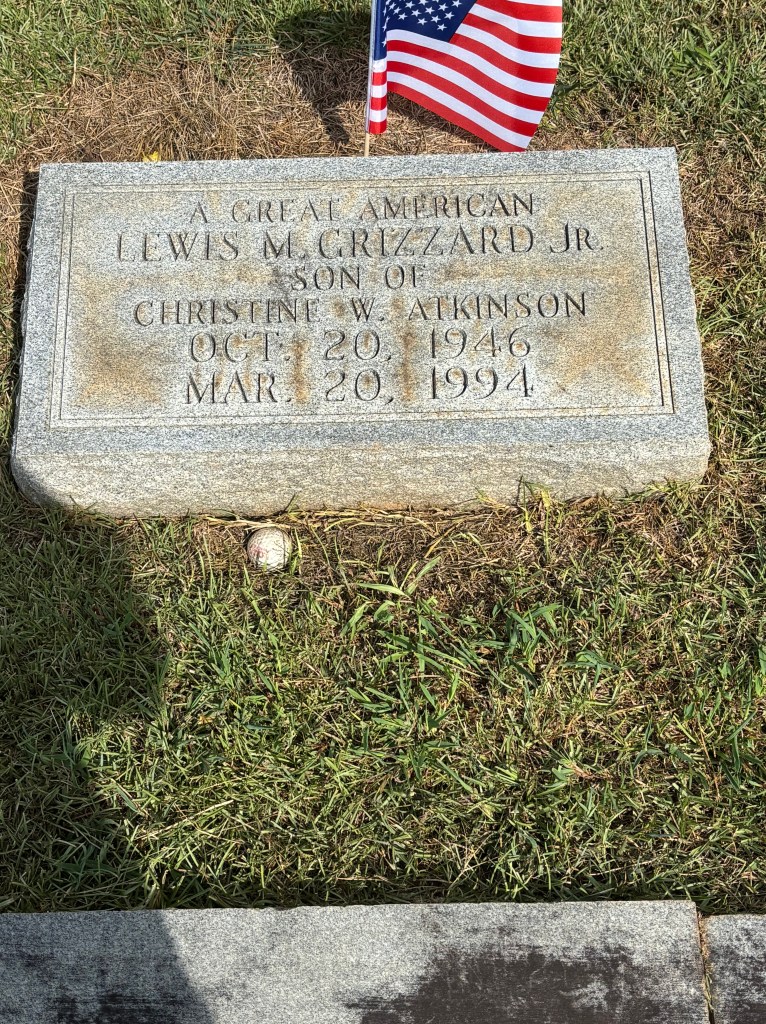
    Recently, while driving home from Atlanta, I pulled off the interstate to get gas and realized I was in Moreland, Georgia. I had to see what the town looked like. I found the Lewis Grizzard historical marker on Main Street. Next to the marker was the Lewis Grizzard museum, though it was closed. I then made my way to Southview Cemetery.

    Grizzard suffered from heart problems and died much too young, at the age of 47. After a quick search, I found the grave of “A Great American…Lewis M. Grizzard Jr.”

    I’ve seen headstones that said mother, father, son, and even our baby. But never “A Great American.”

    A fitting final, concise sentence for a great writer.

    As I drove home, I kept thinking about that headstone. Most of us will end up with one. In a moment of grief…hopefully there will be a little grief…someone will be tasked with writing something “nice” about us. What will they say?

    Evangelist Junior Hill, who always battled weight issues, said he wanted his tombstone to read, “Slim at last.” I’m thinking about using that myself.

    Mel Blanc, the voice of Bugs Bunny, had “That’s All Folks!” chiseled on his tombstone. Rodney Dangerfield’s marker simply says, “There goes the neighborhood.”

    What will yours say?

    Great American? Devoted husband or wife? Faithful follower of Christ?

    Earn those words. Live a life that makes it easy for the poor sap who has to come up with something that everyone…forever…will see.

    Don’t make him have to lie.

  • It’s Not Just About the Destination

    One of my favorite places in the world is Cades Cove in the Smoky Mountains. It is a beautiful place that takes you back in time. There are no tall buildings, traffic lights, or interstates. Shoot, there isn’t even a Dollar General in the Cove.

    One thing you can’t leave behind, even when visiting someplace as peaceful as the mountains, is the need to make decisions. You have to decide what you want to do when you get there. Will your trip consist of sightseeing, hiking, or hanging out with the fudge-and-knife crowd in town?

    If you’re going to the Cove, you need to decide what time to go. It may be tempting to have one more stack of pancakes, but if you get there early enough to watch the place come alive, you won’t soon forget it.

    You also have to decide how you’re going to make your way around the loop. I’ve seen people walking it. That might be enjoyable if it weren’t for the kids hanging out of passing car windows, taking pictures of you. I even rode a bike around the loop once. Personally, it was hard to enjoy the scenery while listening to my heartbeat in my ears and hoping the numbness from my waist down would eventually go away.

    For those of you who have never been, the loop is the road that meanders through the Cove. It’s eleven miles long, but it can take about as long to get around as it takes to get around Atlanta on I-285. Once you pull onto that road, just get in line behind the car ahead of you and start humming, “Wherever He Leads, I’ll Go.”

    In January 1936, hymn writer B. B. McKinney sat with missionary R. S. Jones, who had learned that failing health would prevent his return to Brazil. When McKinney asked what he planned to do next, Jones replied, “Wherever He leads, I’ll go.” Moved by those words, McKinney wrote the hymn that afternoon.

    We all have decisions to make. Some aren’t all that important. What time will I drive through Cades Cove? Others are much more important. What will I do with Jesus Christ? Will I follow Him even when I don’t know where the road will lead?

    In life, and in our walk with Christ, we often focus on the final destination. What will the end of the journey look like? Where will this road take me? We are more willing to travel a strange road if we know what awaits us.

    Faith doesn’t always work that way. Sometimes God shows us the next step without showing us the whole road. We want to know what’s around the bend, but He asks us to trust Him one step at a time.

    Today, I want you to stop and think about the journey. When you belong to Christ, you can trust Him with the destination. But don’t become so focused on where you’re going that you miss what God is doing along the way. Enjoy the journey. Notice His goodness in the ordinary moments. Learn to recognize His presence in the quiet places. Remember that Jesus Christ is with you, even when you cannot see what lies ahead.

    Again, I love the mountains. I love seeing their beauty, but I especially love going there with my wife and girls. The time we spend together is part of what makes those trips special. It’s not just about getting to Cades Cove or seeing another beautiful view or a bear holding up traffic. It’s about the people beside me and the memories we make along the way.

    The same is true when we follow Christ. We may not know where He will lead us, but we can know who walks beside us. And sometimes, the greatest blessing isn’t just reaching the destination. It’s learning to enjoy the journey with Him.

    If you enjoyed this story, find others at http://www.ScottSullivanWrites.com.

  • It’s Time to Buy Bread

    Living on the Gulf Coast, we know the routine when a hurricane (or, as some people say, harricane) heads our way. We’ve been down this road before. It’s funny, but Coast folks date things by hurricanes. “We got the Chevy right after Katrina.” Unfortunately, we got a lot of things after Katrina. Or, “We moved into our house around Elena.” It’s just a Coast thing.

    I’m sure this takes place in other parts of the country as well. There is some old guy (he would have to be old) in Atlanta who has said, “Yeah, we got married just before they started working on the Interstate.” Someone, somewhere, is going on about how they met their wife in the Shoney’s, before it became a Chinese restaurant.

    One of the first things you learn about hurricanes is that you can’t control them. (Conspiracy theorists, move on.) Experts, and now AI, have gotten real good at figuring out where they are going and how strong they might be. We know that dust coming up from the desert in Africa is our friend. We pray for dry air. We check temperatures in the Gulf. We think we understand wind shear. But with all that knowledge, we still can’t change them.

    Coasties know the routine. Secure things in the yard. I think this might have been the first time I took down a Fall flag. Get gas. Check your hurricane box. I keep one with flashlights, chargers, extension cords, and a roll of duct tape. Cause you never know when you will need to tape something.

    We hit the grocery store, too. I get a little out of control. There is something about hurricanes that makes me want to get way too many cans of things we can warm up on the gas stove. He may not have ever received a James Beard Award, but Chef Boyardee was no slouch.

    We empty the water, bread, and milk sections of the grocery store. And then we wait…eat…wait…and eat.

    The funny thing is, after all the preparation, there comes a point when there is nothing left to do. The yard is picked up. The gas cans are full. The phones are charged. The hurricane box is sitting where you can find it. You have enough canned food to feed your family for three weeks, even though you know good and well you are going to eat it all before Tuesday.

    Then you sit and watch the weather.

    You watch the little line on the map. Did it shift??!!! You watch the spaghetti models. You watch the wind speed. You watch the cone. You watch the storm wobble a little to the east and feel a little better. Then it wobbles back west and you start watching again.

    Eventually, though, you realize there is nothing else you can do.

    After you have done all that you can do…you trust.

    Psalm 46:1 says, “God is our refuge and strength, a helper who is always found in times of trouble.”

    I like that. It doesn’t say God will keep trouble from coming. It says He will be our refuge when it does.

    If you think about it, life and hurricanes are a lot alike. There are things that will come your way that you have no control over. You couldn’t stop them if you tried. Life happens. Storms happen. Bad news comes. Plans change. People disappoint us. Doors close. Sometimes the forecast changes overnight.

    We spend a lot of time trying to control things that were never ours to control in the first place.

    That doesn’t mean we sit around and do nothing. We prepare. We make wise decisions. We do what we can. We help our neighbors. We take care of what God has placed in our hands.

    But eventually, we have to leave the rest with Him.

    The hurricane may pass east of us. It may turn. It may weaken. It may strengthen. We can watch the forecast, but we cannot steer the storm.

    And life is the same way.

    We prepare the best we can and then we trust the One who knows the whole forecast.

    God was with us before the storm. He is with us in the storm. And He will be with us after the storm.

    So buy your bread. Fill up the gas cans. Bring in the chairs. Charge your phone.

    And when you’ve done all you can do, trust God.

    He’s still in control.

  • The Way I Am

    If you know me, you know that I’m obviously cultured. Take, for instance, my appreciation for Merle Haggard. Haggard was the poet of the working man. You don’t just listen to his songs; you are dragged into them. For some, Merle is an acquired taste. If you don’t like him, I suggest you get some taste. I saw him in concert several times while I was in high school. While everyone else was excited about the latest ear-splitting leather-clad screamer…I saved up my money to go see Merle and possibly the most talented group of musicians in country music history, The Strangers, play in person. One night I remember sneaking back behind the stage and talking to Haggard’s horn player. I was in high cotton.

    One of his many hits was the song “The Way I Am.” In it, he sings, “Wish I enjoyed what makes my living, Did what I do with a willin’ hand, Some would run, but that ain’t like me, So I just dream and keep on bein’ the way I am.” That’s strong. Songwriter Townes Van Zandt said there were two types of songs: zippity do dah songs and the blues. Haggard didn’t sing too many zippity do dah songs.

    That notion of “that’s just the way I am” carries over to many aspects of our lives.

    Have you ever heard these (or said these)?

    “I have a temper…that’s just the way I am.”

    “I speak my mind…that’s just the way I am.” (Remember, an empty wagon makes the most noise.)

    “I don’t forgive easily…that’s just the way I am.”

    “My dad was like this…that’s just the way I am.”

    “I grew up thinking that about “those” people…that’s just the way I am.”

    “I’m not going to change at my age…that’s just the way I am.”

    We don’t have to become someone we are not. But many times these “that’s just the way I am” statements are just excuses. We are the way we are…because we want to be that way. We get angry because we like it. We say things that are hurtful because we like it. We don’t like forgiving people. We act like Dad because it’s easier than changing. We treat people differently because we choose to and like to feel superior.

    Not everything handed down to us from the previous generation is right. Pharmacies used to sell cigarettes that were advertised to help with asthma…doctors used to use leeches…and babies were given opium to help them sleep. Just because something is the way it’s always been doesn’t mean it doesn’t need to change.

    Think about those “That’s just the way I am” statements in your life. If you are honest, some come from hearts that need to repent. James 1:14 reads, “But each person is tempted when he is drawn away and enticed by his own evil desires.”

    Why do we do the things we do? Because we choose to.

    Yes, your dad may have had a temper. Your family may have a history of alcohol abuse. You may come from a family where speaking your mind (when silence might be the better option) is promoted.

    Don’t do things that will hurt your testimony…because “That’s just the way I am.”

    Change.

    God indeed accepts us as we are…but He loves us too much to leave us there. There are things in our past that we have no control over. We all have things in life we didn’t choose. But we can choose who we will become and how we will behave.

    Break the cycle in your family. Become a positive example for those who follow you.

    Sing it, Merle…

  • It Isn’t Fancy, But It’s Good

    This will come as a shock to you, but there are some foods that people eat…that they won’t admit to eating.

    For instance, Vienna sausages. I love these little mini salt bombs. People turn up their noses in disgust or make gagging sounds when I mention them. The first canned Vienna sausages were produced in America around 1900. They have been on shelves and in lunch boxes for more than a century…someone has been eating them.

    Sardines, in mustard or hot sauce, with crackers make me happy. My wife prefers that I eat them outdoors. I’m happy to oblige. I can hear you now: “They smell…they have bones in them.”

    Listen to my complete defense…they taste good…poor reputation and all.

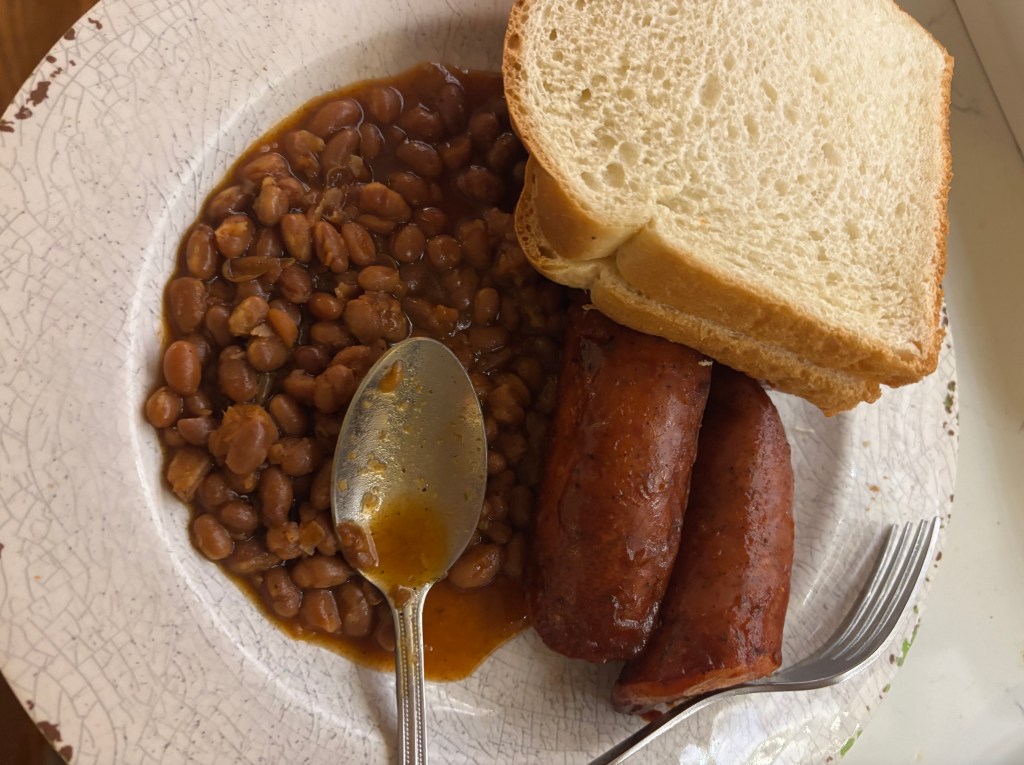
    In my family, pork n’ beans were a staple. I volunteered to open the cans so I could steal the little chunk of pork floating in the sauce. To me, it was better than finding the prize in the Cracker Jack box.

    One of my favorite meals, a meal that I would be satisfied with at Thanksgiving, on death row, or mourning the loss of a loved one, is a plate of pork n’ beans as a side…and a main entrée of link sausage with mustard on white bread.

    Still, highbrowed folks look down on the amazing little pork n’ beans.

    Many people look down on McDonald’s.

    “We…don’t ever eat there.”

    “It’s not real food.”

    That’s fine, Mrs. Astor. About seventy million people eat at McDonald’s every day. Somebody likes it.

    And just a heads up, I’ll cut you over a McRib. I know it’s not rib meat…but it’s heaven on a bun.

    Lots of food is looked down on. I’ll add to my list of likes: SPAM, frozen Salisbury steaks in TV dinners, canned chili, canned tamales, whop biscuits, and Jell-O of any kind.

    Now, it’s okay for people to look down on these things. Some people aren’t as refined as I am. I can accept that.

    But it’s funny how we can decide some things are “beneath” us. We are too good to wear certain brands, drive certain cars, and eat in certain places.

    If we aren’t careful, we can also decide that certain people are beneath us.

    James 2:4 reads, “Have you not made distinctions among yourselves and become judges with evil thoughts?”

    We are quick to make decisions about people and judge others before we have all the details. They may not look like we do…they may not dress as we do…they may not have the things we have.

    But we usually don’t know their story.

    All we can see is the outside…we can’t see their heart…only God can.

    We are created in the image of God. Genesis 1:27 says, “So God created man in his own image; he created him in the image of God; he created them male and female.”

    Did you catch that?

    We are created in the image of God.

    The person we shy away from, dismiss, or quietly decide we are better than…bears the image of God.

    You like tofu…I like potted meat.

    We are different. That’s okay. We don’t have to like the same things. Give me some grace for my uncouth ways.

    But let’s remember to extend grace to those around us. They are created by God, and they have a story.

    Because you are loved…extend love.

  • Watch Those Rocks

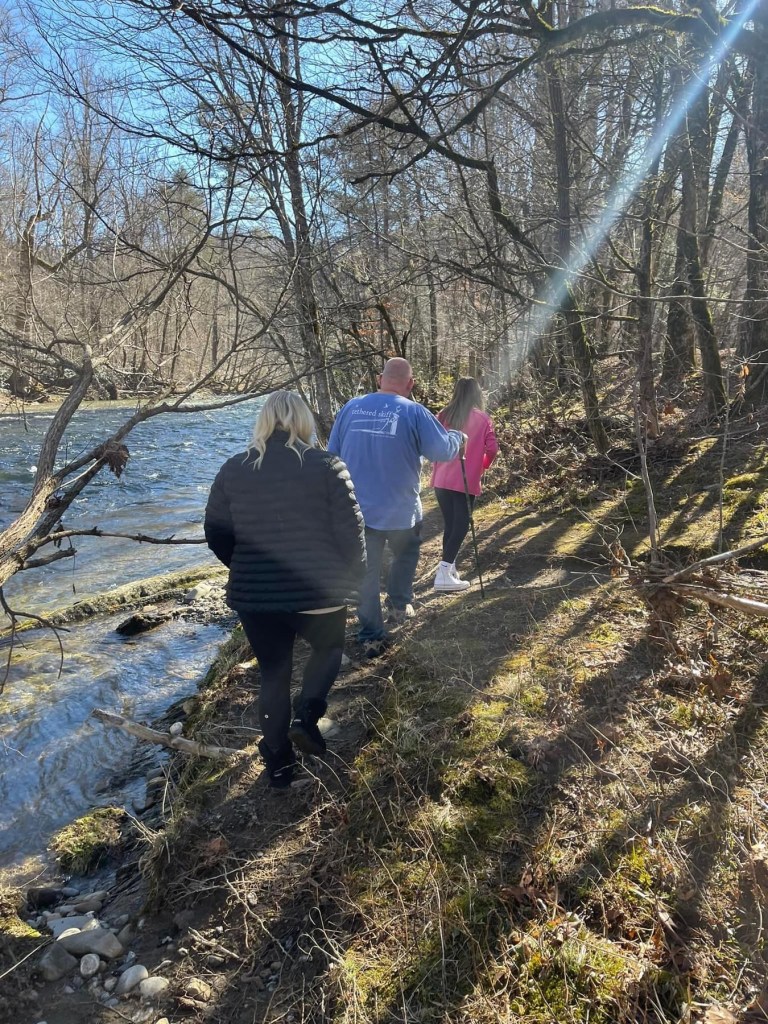
    One of my favorite things to do is to go for a walk in the woods. I’m not a hiker…I’m a walker. I especially love to go to the mountains and enjoy the beauty, peace, and feel of the woods.

    I’m always amazed that, as I walk, God has created all these beautiful things, and very few people will ever venture off the road and see them. There are flowers that no human eye will ever see before they fade and die. There are streams that no one notices and birds that sit high in the trees, just showing off the feathers God painted.

    Many times on these mountain trails, you will encounter rocks…big rocks, little rocks, all kinds of God’s rocks. Even though we don’t think about it, every time we come to one of these rocks on the trail, we make decisions.

    Some people see them as a hazard and dig them out and roll them away. If that’s you, God bless you. I’m not a rock mover. I figure God put them there for a purpose.

    Some people are oblivious to the stones and trip over them and fall. One minute they are enjoying the peace and beauty of the woods. The next, they are admiring the dirt up close.

    Others, while walking through God’s creation, never get tripped up because they keep their heads down and look for the rocks. They see them and point them out to others. Now, keep in mind, they miss a lot of other things. They miss what’s going on around them…but they never miss a rock that might cause them problems.

    The last group chooses to see the rocks and use them.

    Many times on mountain trails, things can get slick. All that rain and water from above has to come down. Good hiking shoes, even though I’m a walker, are a must. Hiking sticks help, too. But what is often overlooked are the rocks on the path. A stone stuck in the mud can become a good foothold and keep you moving forward.

    If you are still reading, you may be wondering where I’m going with this.

    Consider these verses from Psalm 91:11–12:

    “For He will give His angels orders concerning you, to protect you in all your ways. They will support you with their hands so that you will not strike your foot against a stone.”

    This is a psalm of protection. Throughout the psalm, we see God’s care and protection over His people.

    Do you see it?

    “So that you will not strike your foot against…a stone.”

    God doesn’t put us on paths that are devoid of stones. God never promises to remove the stones. He never promised us that life would be free from obstacles and problems. What He does promise is that He will be with us as we encounter those things in our path that can trip us up.

    Our stones may look like strained relationships, financial problems, difficulties at work, or stones disguised as health issues. Stones wear many different outfits. They may look different, but they are still stones. Some are small and don’t cause much trouble. Others are so large they can seem to break us.

    The issue is this: How will we deal with the stones in life?

    I think we can deal with them much like we deal with real stones on a mountain trail.

    We can stop and work and struggle to remove them. Again, I think God puts some stones before us for a reason.

    We can ignore them.

    “What stone?”

    But knowing that God protects us does not mean that we become oblivious to the stones. If your stone is a health problem, you probably should go see a doctor. Ignoring something won’t make it disappear.

    We can also do just the opposite and focus all our attention on the stones in our path. We see them coming. We anticipate how we will deal with them. When we get to the stone, we already have a plan.

    But there is a danger in that, too.

    On the other side of the stone, you may have missed a lot of life because you spent the entire journey with your head down, staring at a rock.

    Perhaps the best way to deal with the rocks in your path is to treat them like the rocks on a slippery mountain trail.

    Use them.

    Each time you push off a rock, you are climbing higher. You are moving forward. You are getting closer to your destination.

    The rock that looked like an obstacle may become the very thing that helps you take the next step.

    What stones are in your path today?

    God has allowed them to be there. You may not understand why. You may wish He would remove them. But don’t spend your entire journey staring at them.

    Watch those rocks. Learn from them. Use them. And keep walking.

    God is not finished with you yet.

  • Don’t Worry, I’ve Got It

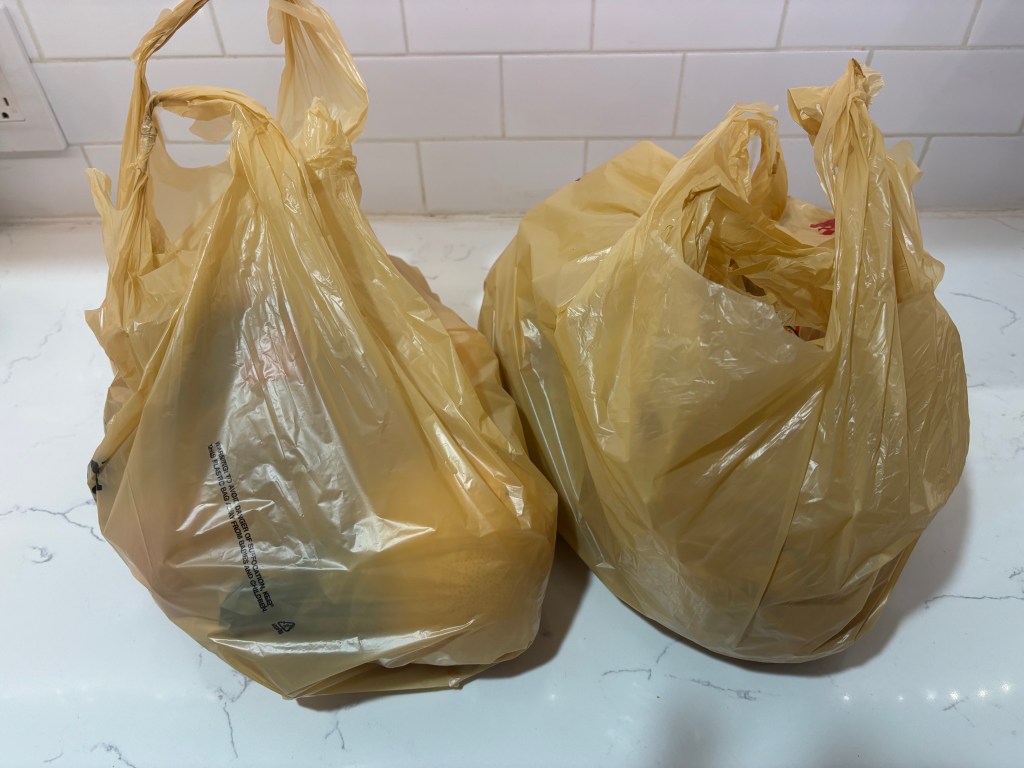
    Most men I know have a one-trip policy when it comes to bringing groceries into the house…or taking garbage out. We may have bought enough to fill the buggy (yes, it’s a buggy, not a cart) to the top…but we somehow think we can bring it all in with one trip. We may have shoved trash down until it’s falling out and then gone and collected another bag with trash from the other rooms in the house…but it all goes out with one trip. This isn’t so much a problem of poor math skills…it has more to do with pride. We can handle it. As we walk past with the plastic bags digging into our fingers, you may hear a labored, sarcastic, “Don’t worry, I’ve got it.”

    From an early age, we are told to take care of ourselves. Look out for yourself because no one else will. And if you want something done right, do it yourself. These sayings have a time and a place. We must learn to be independent. We must learn to be responsible.

    But we also need to learn that we can’t carry all of our burdens alone.

    As I’ve gotten older, and hopefully wiser, I make a call on the way home from the grocery store that I know irritates my girls. When I’m about five minutes from home, I call and tell them I’m almost home and they need to come out and help unload the groceries. I could still do it…but I can’t do it as well as two or three sets of hands can. Many hands do indeed make light work.

    These are simple day-by-day examples of sharing a burden.

    Every day, spiritually, we carry burdens. Burdens that we were never intended to carry alone. We have money burdens. Marriage burdens. Fathers (and many mothers) carry the burden of providing for their families. We carry burdens at work. We carry the burdens of past failures. We carry the burden of uncertain futures. We carry burdens as parents, just hoping that we have raised our children right. We carry burdens about decisions we don’t know how to make. We carry spiritual burdens. Have we been faithful to the Lord today? Have we done all that the Lord intended for us to accomplish today?

    So what do we do? We reach in and pick up another bag because we know we can handle it. Don’t worry, world, I’ve got it. We strain a little more and keep going.

    But God never told us to carry everything ourselves.

    In Psalm 55:22, David writes, “Cast your burden on the LORD, and he will sustain you; he will never allow the righteous to be shaken.” That’s good stuff. David paints a beautiful picture of not just laying our burdens down. He says, “Cast” your burden on the Lord. Throw it off. Toss it. Chunk it.

    In other words, stop trying to carry what God is willing to carry for you.

    Instead of straining under your burdens, call out like I do on the way home from the grocery store: “I need some help.”

    Then let somebody help.

    More importantly, let God help.

    Today, cast off the burdens you were never intended to carry alone.

    If you enjoyed this little word of encouragement, you can find more like it at The Notebook, my collection of stories, devotions, and reflections.

    https://www.scottsullivanwrites.com

  • Getting Used to Good Things

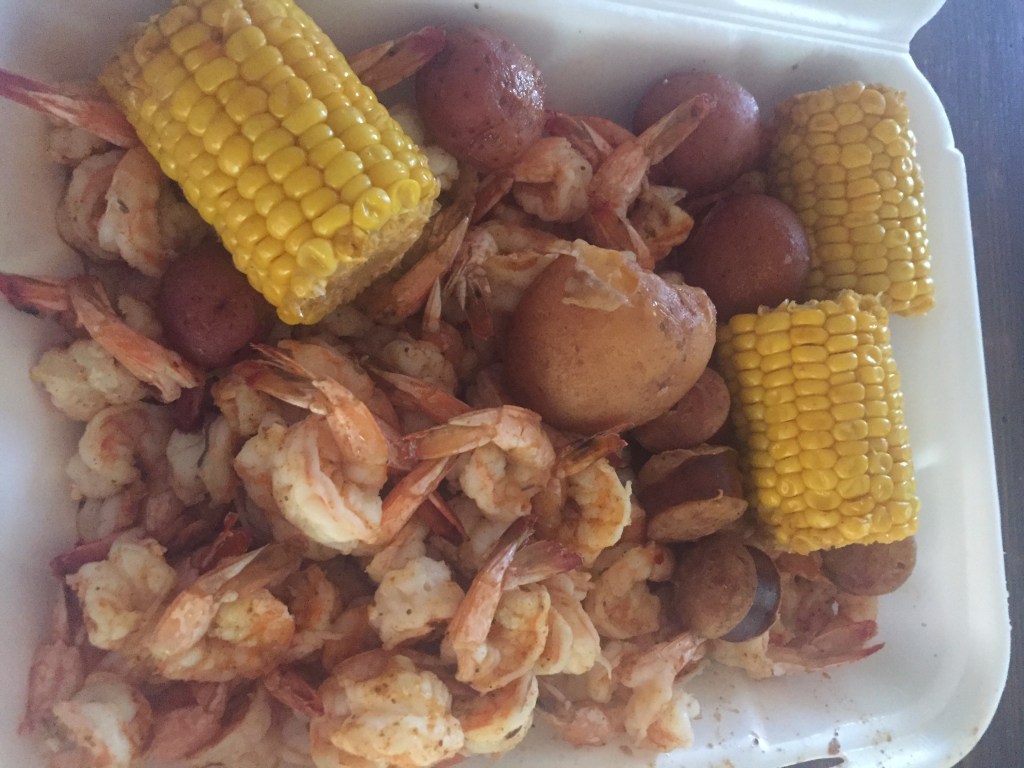
    Living on the Coast, we take things for granted. We have an abundance of places to get good…fresh…seafood. We can pay someone to prepare it, or we can go down to the dock and get it right off the boat. Be wary of someone selling shrimp out of a van in Kansas.

    We can also go down to the river and watch the boats come in and go out. And…if you watch closely enough, you might be able to find a dolphin breaking the water in the wake of a shrimp boat. You just don’t have that everywhere.

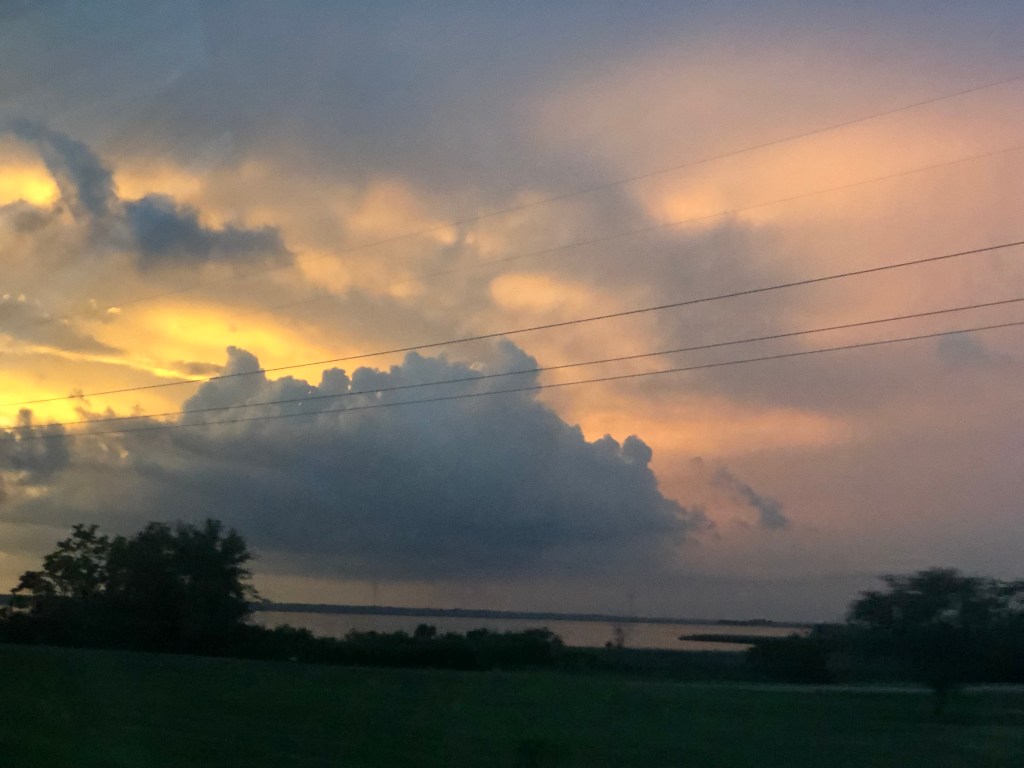
    One of the things I’ve done all my life is ride down to the beach and look at the Gulf. There is nothing like cruising the beach. My parents did this with us when I was a kid…my wife and I did it when our girls were small…and now my oldest daughter does it with her sister in the passenger seat. Growing up by the water and seeing the amazing sunsets is just a part of life on the Coast.

    These things…because we experience them over and over…can become common to us.

    A real, honest-to-goodness shrimp po-boy can easily become nothing more than something to fight off hunger pangs. But if you live in a place where shrimp comes breaded in boxes at the grocery store next to the frozen fish sticks…you wouldn’t take a po-boy for granted. If the only dolphin you have seen was on television or in a tank…you haven’t truly seen the beauty of one of God’s most graceful creatures breaking through the water to draw in air.

    If all you have ever seen is concrete and hard landscapes, a Gulf Coast sunset might change you forever.

    We can do things and see things so often that we fail to appreciate them. Take, for instance, the song “Amazing Grace.” Most people I know, churched or unchurched, can sing at least a little bit of “Amazing Grace.”

    If we are not careful, though, we can sing along with the music and miss what we are singing. It was God’s amazing grace that saved a wretched sinner like me. It is God’s amazing grace that not only saved me…but that will usher me into heaven one day. God’s grace is amazing. Let’s not take it for granted.

    Every morning I try to tell my wife, “I love you.” My girls won’t go to bed, even though they are both teenagers, without telling me goodnight and “I love you.”

    Repetition can steal sincerity from our words. “I love you” can become just something we say…no different from “Talk to you later” or “Have a good day.”

    Hopefully, you have people in your life to whom you routinely say, “I love you.” The next time you do this…mean it. Don’t just mouth the words.

    We treat the word love too casually. I love Moon Pies. I love hot dogs. I love Jell-O with “stuff” in it. But I don’t “love” these things like I love my wife and daughters.

    So let’s appreciate the blessings of life that are at risk of becoming common. Sing songs of the faith…but mean what you are singing. Tell people you love them often…but earnestly. See God in the everyday things like a sunset or a good shrimp po-boy.